















Generic selectors
Exact matches only
Search in title
Search in content
Post Type Selectors

Custom Healthcare App Development Services

Healthcare app development services help healthcare organizations turn high-friction patient, provider, and care-team workflows into secure mobile and web app experiences. The goal is not just to build an app; it is to make scheduling, intake, messaging, mobile EHR access, telehealth, RPM alerts, lab updates, payments, and follow-up actions easier to complete.

OSP builds custom healthcare apps around real users, data flows, and integration dependencies. Our healthcare application development services cover discovery, UX/UI, iOS and Android development, cross-platform builds, backend/API engineering, EHR/HIE connectivity, PHI-aware access controls, QA, release readiness, app-store support, and post-launch optimization.

Solution
Discuss Your Healthcare App Requirements

Explore Healthcare App Development Services

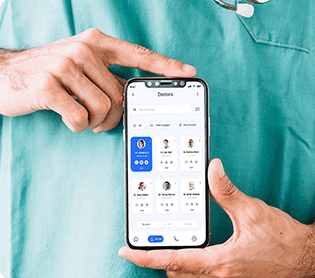
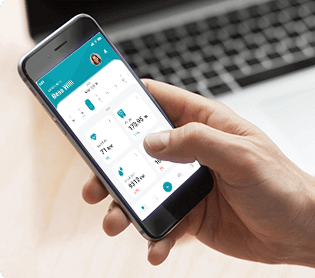
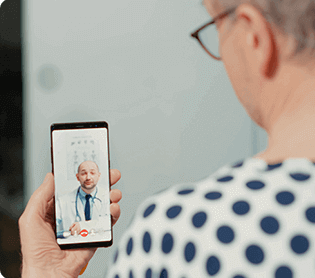
mHealth app development helps healthcare organizations give patients and providers secure access to care actions from smartphones and tablets. OSP develops mobile healthcare apps for appointment booking, digital intake, RPM alerts, secure messaging, medication reminders, healthcare payments, care-plan visibility, and patient engagement.

These apps are built for mobile adoption, so users can complete high-volume tasks with fewer calls, fewer manual handoffs, and clearer next steps.

Patient engagement apps keep patients connected before, during, and after visits. OSP builds patient-facing healthcare apps with digital intake, appointment reminders, secure messaging, medication reminders, educational resources, care plan updates, test result access, and follow-up workflows.

When connected to scheduling, EHR/HIE, telehealth, RPM, or care management systems, these apps help patients take next steps while reducing repetitive staff outreach.

Mobile EHR apps extend relevant patient data into secure clinician workflows without replacing the core EHR. OSP develops EHR-connected healthcare apps for patient history, medications, allergies, immunizations, lab results, care notes, clinical task visibility, and care-team notifications.

Using secure APIs and HL7/FHIR-based workflows where applicable, OSP helps providers access the right information from mobile devices while supporting role-based access, auditability, and PHI protection.

E-prescription apps help providers send prescriptions electronically while reducing paper-based handoffs between clinicians, patients, and pharmacies. OSP develops e-prescription applications with medication search, dosage instructions, pharmacy routing, refill requests, patient notifications, and prescription status visibility.

These apps can also support secure data exchange, user authentication, audit trails, and integration with EHR or pharmacy workflows where required.

Laboratory management apps help labs, providers, and patients coordinate sample collection, test scheduling, order status, inventory updates, result notifications, and reporting from an app interface. OSP develops lab workflow apps that connect lab teams with dashboards, provider updates, and patient alerts.

These apps reduce manual tracking, improve result visibility, and make lab communication easier for clinicians and patients.

Practice management apps help clinics manage scheduling, digital intake, patient communication, insurance verification tasks, payments, staff workflows, and operational reporting from a secure web or mobile interface.

OSP develops custom healthcare apps that support administrators, providers, and patients with role-based access, intuitive navigation, cloud-ready architecture, and integrations with EHR, billing, payment, and analytics systems.

HIE-integrated healthcare apps make external patient information available inside secure app workflows. OSP integrates healthcare apps with HIE, EHR, and hospital systems to support app-based access to patient history, prescriptions, lab results, referrals, care summaries, and care coordination data.

Our healthcare app development services can include secure APIs, HL7/FHIR-based workflows where applicable, consent-aware access, role-based permissions, audit logs, and privacy-focused architecture for sensitive health information.

BENEFITS

Custom healthcare mobile apps improve patient access, provider productivity, care continuity, and operational efficiency by connecting users, workflows, and healthcare data through secure digital experiences.

Healthcare apps streamline operations by reducing manual scheduling, paperwork, phone calls, status checks, and disconnected communication. Custom apps can support appointment booking, digital intake, automated reminders, clinical task notifications, mobile access, and secure messaging. For providers and administrative teams, this means fewer repetitive tasks, faster coordination, and better workflow visibility across care delivery and practice operations.

Healthcare apps support better patient care by giving patients and providers faster access to the right information and actions. Features like test-result access, medication reminders, telehealth visits, RPM alerts, secure messaging, and care-plan visibility help improve care continuity. For clinicians, mobile access to patient information can support faster decisions and better coordination across care teams.

Custom healthcare apps reduce staff workload by moving routine patient actions into guided digital workflows. Patients can complete intake, confirm appointments, view next steps, send secure messages, receive reminders, make payments, and follow care plans without repeated phone calls. This helps care teams improve responsiveness while spending less time on manual follow-ups and status checks.

Let's build your project

Healthcare App Development Services

OSP's healthcare app development services cover app discovery, workflow mapping, UX/UI design, mobile and web app engineering, backend/API development, EHR/HIE integration, app security planning, QA, release readiness, app launch, and post-launch support for patient-facing, provider-facing, and enterprise healthcare apps.

Industry

Healthcare Mobile App Development Services

  • iOS and Android healthcare mobile app development
  • Cross-platform app development for patient and provider workflows
  • UX/UI design for usability, accessibility, and adoption
  • Backend, API, and cloud-ready app architecture
  • Secure PHI handling, role-based access, and compliance-aware QA
  • App testing, deployment, app-store readiness, and post-launch support
Industry

Patient-Centered Healthcare Application Development Services

  • Patient apps for appointment scheduling and digital intake
  • Secure messaging and provider-patient communication workflows
  • Medication reminders, care-plan visibility, and follow-up support
  • Telehealth and remote patient monitoring app workflows
  • Wearable and IoT data integration where applicable
  • Patient engagement dashboards and notification workflows
Industry

Medical App Development Services For Healthcare Management

  • Provider and administrative apps for clinics, hospitals, and practices
  • Scheduling, staff tasking, inventory, and operational workflow apps
  • EHR-connected clinical management apps for mobile or web users
  • Billing, payment, and practice management app workflows
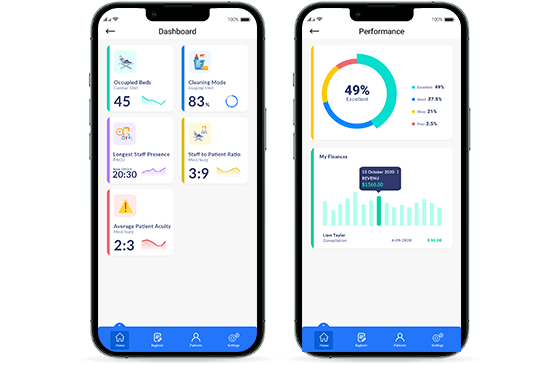
  • App dashboards for operational visibility and care-team decisions
  • Integration with EHR, billing, payment, analytics, and secure cloud systems

Our Core Services

Solutions We Offer

What Our Client Said

Industry Industry Industry Industry Industry Industry Industry Industry Industry Industry

Solutions We Delivered

case
					study logo

Mental Health PM+RCM Solution

Built a customized solution to improve revenue cycle and practice management workflows in a mental-health center.

55%

reduction in claims losses

card image
View Case Study
case study
					logo

Doctors on Demand Platform

Developed a telehealth platform with virtual streaming capabilities to improve care accessibility and patient engagement.

60%

improvement in home care experience

card image
View Case Study
case
					study logo

Ultrasound Analysis and Telehealth

Created an AI-powered ultrasound streaming solution with telehealth capabilities to solve real-time remote diagnosis challenges.

50%

improvement in diagnosing abnormalities

card image
View Case Study
case
					study logo

Advanced RPM With Telehealth

Integrated advanced RPM with telehealth and chatbot capabilities to improve chronic care and real-time tracking of patients.

60%

of patients reported a better overall experience
card image
View Case Study
case study
					logo

Suicide Risk Assessment and Prevention Software

Developed RPA-powered diagnostic tool to prevent suicide risks in veterans and foster clinical decision-making.

50%

improvement in diagnostic accuracy

card image
View Case Study
case
					study logo

Senior Home Care Management Solution

Developed a digital home care solution that improves patient-provider communication, remote care and care coordination.

50%

greater accuracy in health assessment

card image
View Case Study

Why Choose OSP as Your Healthcare App Development Partner

Healthcare Workflow Understanding

App Workflow Understanding

OSP maps healthcare apps around real patient, provider, administrative, and care-team workflows before design begins. This helps reduce adoption friction, avoid feature bloat, and align the app with day-to-day care and operational tasks.

Secure App Architecture

Secure App Architecture for Healthcare Workflows

OSP builds healthcare apps with PHI-aware data flows, role-based access, secure APIs, audit logs, session controls, and compliance-aware QA so sensitive information is protected without making the app hard to use.

EHR/HIE Integration Experience

EHR/HIE Integration for App Workflows

OSP connects healthcare apps with EHR, HIE, hospital, RPM, telehealth, billing, and analytics systems so patients, providers, and care teams can use connected data inside the app experience.

Patient and Provider-Centered UX

Patient and Provider-Centered App UX

OSP designs app experiences for the people who use them most: patients, clinicians, caregivers, administrators, and care teams. Clear navigation, role-based screens, and practical task flows help improve adoption and reduce training friction.

Scalable iOS and Android Delivery

Scalable iOS, Android, and Web App Delivery

OSP supports native iOS, Android, cross-platform, backend, API, cloud, QA, and app-store delivery for healthcare apps that need to support more users, new locations, added workflows, and future integrations.

Post-Launch Support and Optimization

Post-Launch App Support and Optimization

OSP supports healthcare apps after launch with monitoring, bug fixes, performance improvements, security updates, app-store and OS-version updates, integration support, roadmap enhancements, and user-feedback improvements.

Get a Practical Roadmap for Your Healthcare App

Latest Talks

Author
Insight

Things You Must Consider During Remote Patient Monitoring App Development

Read More Hear
Author
Insight

Everything You Should Know About Healthcare App Development in 2023

Read More Hear
Author
Insight

Healthcare Mobile App Development: A Developers Handbook for 2023

Read More Hear
Author
Insight

Ultimate Guide for Healthcare Mobile App Developers To Develop Advance Healthcare Apps in 2023

Read More Hear
Author
Insight

A Detailed 2023 Guide to Mobile EHR Applications for Healthcare Developers

Read More Hear
Author
Insight

How to Develop Home Healthcare Application from Scratch?

Read More Hear

Frequently Asked Questions

Before starting healthcare app development, define the app goal, target users, required platforms, priority workflows, must-have features, integrations, security needs, budget range, timeline, and success metrics. It also helps to document EHR/HIE touchpoints, patient onboarding steps, telehealth or RPM needs, notification logic, reporting requirements, and post-launch support expectations. This gives OSP enough context to shape a practical scope and reduce rework before design and engineering begin.

Hospitals should avoid treating the app as a screen design project before validating workflows, users, integrations, security, and adoption barriers. Common mistakes include unclear goals, too many first-release features, poor provider UX, weak patient onboarding, unplanned EHR/HIE integration, limited accessibility, and insufficient QA before launch. A successful healthcare mobile app should help users complete specific care tasks faster, with secure data flow and measurable operational or patient-engagement outcomes.

Healthcare apps can improve engagement by moving repeated communication into guided self-service workflows. Patients can schedule visits, complete intake, receive reminders, view care plans, access test results, send secure messages, join telehealth visits, submit RPM readings, and follow medication prompts from the app. When these actions connect with scheduling, EHR/HIE, telehealth, RPM, or care-management systems, staff spend less time on routine calls and manual follow-ups.

A healthcare app development services partner should include discovery, UX/UI design, iOS and Android development, backend/API architecture, EHR/HIE integration, security planning, compliance-aware QA, launch support, and post-launch maintenance in a custom app scope. Feature planning should cover appointment scheduling, secure messaging, patient portals, mobile EHR access, RPM alerts, telehealth workflows, medication reminders, analytics dashboards, role-based access, and notification workflows. The scope should clearly define users, integrations, data flows, compliance needs, and success metrics.

Healthcare app development cost depends on app type, platforms, user roles, UX complexity, integrations, data security, compliance needs, AI or RPM features, testing depth, launch support, and long-term maintenance. A simple patient-facing app with scheduling and reminders will cost less than a multi-role provider app with EHR/HIE integration, telehealth, RPM, analytics, secure APIs, and advanced workflows. OSP estimates cost after reviewing the app idea, workflows, integrations, timeline, and scalability requirements.

Yes. Healthcare apps can integrate with EHR, HIE, RPM platforms, telehealth systems, hospital systems, scheduling tools, billing systems, payment platforms, and analytics dashboards through secure APIs, HL7/FHIR-based workflows where applicable, validated data exchange, and role-based access. Integration planning helps reduce duplicate entry, improve care coordination, and keep app users connected to accurate healthcare data.

OSP builds security into the app architecture from discovery through QA and launch. Security planning can include encryption, role-based access, MFA where needed, audit logs, secure APIs, session controls, data validation, PHI-aware workflows, and compliance-aware testing. The goal is to protect sensitive data while keeping patient, provider, and healthtech app workflows usable.

Healthcare organizations should choose OSP for custom healthcare app development services when they need a partner that understands healthcare workflows, integrations, compliance needs, user experience, and long-term scalability. OSP supports app discovery, UX/UI design, iOS and Android development, backend/API engineering, EHR/HIE integration, QA, deployment, and post-launch support. Our approach helps providers, hospitals, clinics, payers, and healthtech teams build apps around real patient-facing, provider-facing, and enterprise healthcare workflows.

Yes. OSP supports healthcare apps after launch with monitoring, bug fixes, performance optimization, security updates, operating-system and app-store updates, integration support, feature enhancements, and user feedback improvements. Post-launch support helps the app stay stable, secure, scalable, and aligned with changing patient, provider, and operational needs.

Healthcare organizations should choose custom healthcare app development when existing solutions cannot support their workflows, integrations, user roles, compliance needs, data ownership requirements, or long-term roadmap. A template app may work for simple use cases, but custom apps are better for complex EHR/HIE integration, RPM, telehealth, patient engagement, provider workflows, analytics, and enterprise scalability. Custom development gives organizations greater control over UX, security, interoperability, automation, and future enhancements.

Yes. OSP can share relevant healthcare app and software case studies based on the use case, such as telehealth, RPM, patient engagement, mobile access, digital care workflows, or operational apps. The most useful examples are selected around the buyer’s goal: patient access, care coordination, provider productivity, remote monitoring, or administrative workflow improvement.

Custom healthcare apps can be designed per the organization’s specialty-specific workflows and data requirements. Further, collaborating with healthcare professionals from specific medical specialties can help build result-oriented, tailored healthcare apps. For example, cardiology apps will focus on heart monitoring, while radiology apps may prioritize image analysis. Customization allows integration with specialty-specific devices and compliance with industry standards. These customized apps empower providers to improve patient outcomes and deliver quality care.

An enterprise lifecycle for custom healthcare mobile app development starts with discovery, followed by MVP development, pilot testing, and full rollout. Each phase includes compliance validation for a HIPAA-compliant healthcare app and rigorous healthcare app usability testing. Integration checkpoints ensure seamless healthcare app integration with EHR, enabling secure and scalable deployment across healthcare systems.

Applications such as patient engagement platforms, scheduling tools, and telemedicine and remote patient monitoring apps typically deliver the fastest ROI. Prioritization should be based on measurable outcomes supported by healthcare app ROI measurement, such as reduced no-shows or improved adherence. Starting with high-impact, low-complexity use cases ensures faster returns from AI healthcare app development services or engagement-driven solutions.

Healthcare organizations should track patient engagement app KPIs such as DAU/MAU, retention rates, and task completion metrics like appointment bookings or medication adherence. These indicators, combined with healthcare app ROI measurement, help evaluate how effectively a custom healthcare mobile app development initiative drives sustained engagement and improves patient experience.

Estimating timeline and ROI requires a phased approach across MVP, pilot, and rollout stages. Factors like integration complexity, compliance, and the scope of healthcare app integration with EHR impact delivery timelines. ROI is measured using healthcare app ROI measurement frameworks, focusing on operational efficiency, reduced healthcare app development costs, and improved patient outcomes achieved through AI healthcare app development services.

OSP integrates advanced capabilities through AI healthcare app development, enabling predictive analytics, clinical decision support, and image analysis. This involves structured data preparation, model validation, and continuous monitoring. AI-driven insights enhance care delivery while maintaining compliance standards required for enterprise-grade healthcare applications.

Schedule A Call
©2026 OSP. All Rights Reserved.